City Break Europe Documents: Planning Short Trips from the UK
For a short city break in Europe, you will usually need a valid passport, a clear travel plan showing when you leave, and a flight reservation that shows how you intend to return. A booking reference from a real airline reservation is far more useful than screenshots or made-up documents, so keep your paperwork honest and checkable. Check the entry rules for your destination before you travel, because the embassy or border officer makes the final decision.
Check your passport validity against the rules for your destination before you book
A flight reservation is a real airline booking record with a reference, not a ticket
Keep your itinerary, hotel details and return plan together in one folder
Entry decisions are made by the border authority or embassy, not by a booking service
Re-check rules close to your travel date, as requirements can change
Which documents do I actually need for a short city break in Europe?
[[img:1]]
For a short city break in Europe, most travellers from the UK need a shorter list than they expect, but each item matters. The starting point is a valid passport, and the rules on validity and entry requirements are set by the country you are visiting, so check the official government travel advice for each destination before you go.
Beyond the passport, it helps to carry a small set of supporting papers that show you are a genuine visitor with a plan. Border officers often want to see these at a glance, so keep them together in one folder or on your phone.
**Passport** that meets the destination's entry rules
**Flight itinerary** showing your outbound and return journeys
**Accommodation details** such as a hotel confirmation or the address where you will stay
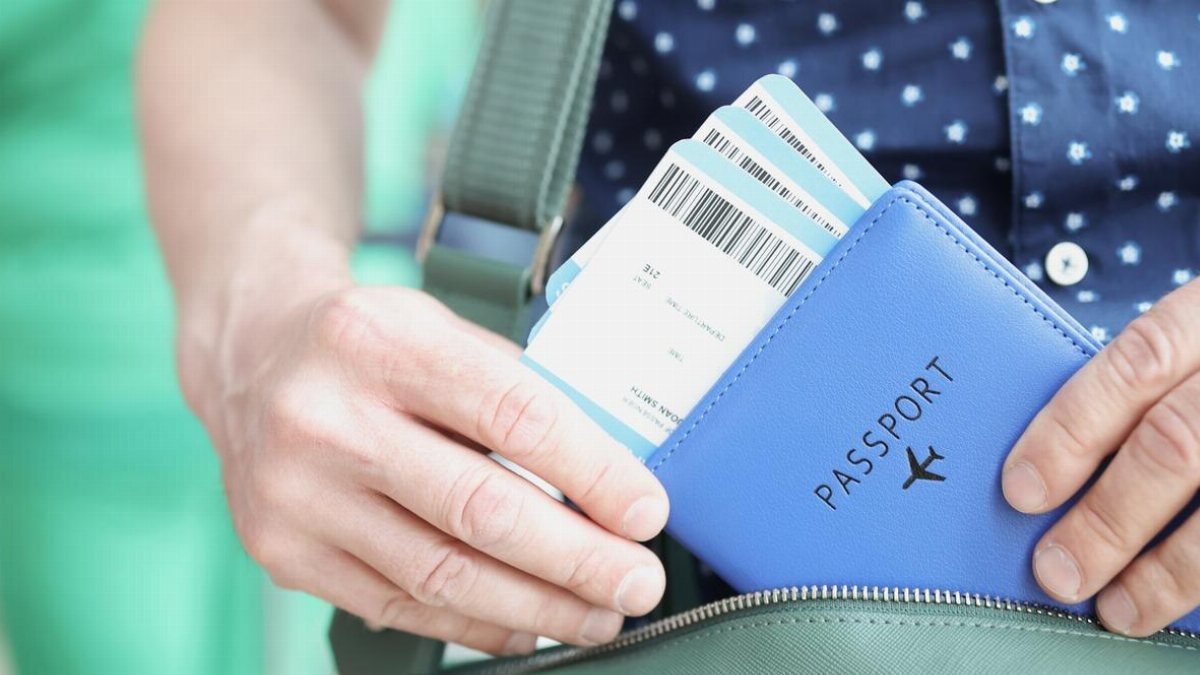
**Proof of onward or return travel**, such as a flight reservation with a booking reference
**Travel insurance** details, where the destination or your plans call for it
Take a weekend in Lisbon for a couple flying from Manchester. They would carry their passports, a printed flight itinerary, the hotel confirmation for each night, and their return flight reservation. That small folder covers what most officers ask about, and they can show it without fuss.
How much passport validity should I have left?
Passport validity is one of those details that is easy to overlook until it causes trouble at check-in or at the border. Many countries, including several in Europe, expect your passport to be valid for a set period beyond the date you plan to leave, and some airlines apply their own rules before you even reach immigration. The exact requirement depends on the destination and on your nationality, so it is worth checking each country on your route rather than relying on a rule of thumb.
Start by looking up the official government travel advice for every country you will enter or transit through, and check the entry requirements section carefully. Note the minimum validity period, whether it is measured from your arrival or your departure date, and whether it applies to every country on your route or only the first. Keep a short list next to your itinerary so you can tick each one off.
Here is an example of how this catches people out. Suppose a couple from Leeds plans a long weekend in Lisbon with a connection in another European city, and their passports expire seven months after the trip. That looks comfortable, but if any country on their route wants more remaining validity than they have, they could be refused boarding. Renewing early, while the old passport is still valid, avoids that worry entirely.
If you are unsure whether your passport is due for renewal, do it before you book flights, not after. A few minutes spent checking now can save a great deal of disappointment later.
What is a flight reservation and how is it different from a ticket?
[[img:2]]
A flight reservation is a booking record held by the airline or booking service. It carries a unique booking reference, the passenger names as they appear on their passports, the flight numbers, dates and times, and the cabin class. Think of it as the airline's written promise that a seat is held for you on a given route, and it is the document you show when someone asks what you have booked.
A ticket, by contrast, is what you receive once the fare has been paid in full and the airline has issued it. Older paper tickets have largely disappeared, and today the ticket is usually an electronic record linked to your reservation. The reservation comes first, the ticket follows payment, and the two are connected by the same reference.
This difference matters for a city break. Suppose you and a friend are flying from Manchester to Lisbon for four nights and want to show a border officer your onward journey. A confirmed reservation with a booking reference and your return flight details is exactly what you need to present. You do not necessarily have to hand over a paid, issued ticket for that purpose, though you should check the requirements of your own airline.
Some people hold a reservation for a short while without paying, usually with a time limit, and then either pay to issue the ticket or let the hold lapse. Knowing which stage you are at helps you avoid assuming a seat is secure when it is not. If in doubt, look at your booking confirmation and check whether it says the fare has been paid.
Why do border officers ask for proof of onward or return travel?
Border officers are not trying to catch anyone out. When someone arrives at a Schengen airport for a short stay, the officer has a simple question to answer: is this visit temporary, and does the person intend to leave when it ends? A confirmed onward or return journey is one of the clearest everyday signs that the answer is yes.
Think of a couple flying from Manchester to Lisbon for a four-night break, with a return flight to Manchester booked for the Monday. Their outbound and return bookings tell the officer exactly when they plan to leave, which matches the number of nights they have declared. Without that, the officer has to guess, and guessing tends to lead to more questions at the desk.
The same logic applies when a traveller is visiting several cities. A train or flight out of the final city, dated within the permitted stay, shows that the trip has a defined end. This is why an itinerary with a clear finish reads as a planned holiday rather than an open-ended move.
It is worth being realistic about what this proof does and does not do. A return booking shows intent and timing; it does not on its own settle whether entry is allowed, and officers can still ask about funds, accommodation and the purpose of the visit. Treat the onward or return journey as one supporting part of a complete, consistent picture rather than a single key that opens the door.
TABLE flight reservation versus airline hold: which suits a city break?
[[img:3]]
Choosing between a confirmed flight reservation, an airline hold and a simple itinerary printout comes down to what you need to show and how long you need to keep the seats. They are not interchangeable, and each has a different role on a city break.
A confirmed flight reservation carries a booking reference from the airline and a record that the seats exist in your name for the stated dates. It is the most useful document when you are applying for a visa or need to show a clear onward or return journey. For example, a couple planning a long weekend in Lisbon and then a visa-backed trip onward to Madrid would want confirmed reservations so every leg can be checked against a reference.
An airline hold is a temporary reservation that keeps seats for a short period without full payment. It suits someone who is still deciding on dates and wants to protect a fare, but it usually expires and it is not a settled record for a visa file. Treat it as a planning tool rather than proof.
A simple itinerary printout lists flights, times and hotels in one place. It helps you and your group stay organised on the ground, but on its own it may not show that the bookings are real. Many people print one as a companion to the reservation rather than in place of it.
In short, use the confirmed reservation for paperwork and the itinerary for daily use.
What should a flight itinerary for visa purposes include?
A flight itinerary for visa purposes should be a clear, printable page that lets a visa officer or border official match your plans to your passport in a few seconds. Start with the passenger's full name, spelled exactly as it appears in the passport, because a mismatch is the most common reason a document raises questions. Then list the booking reference, the airline's own code for the reservation, along with each flight number, departure and arrival airport, date and local time.
Check that every date runs in order and that the return or onward flight leaves after your planned stay ends. For a short city break, for example a four-night trip from London Stansted to Lisbon with a return to Stansted, the page should show the outbound and inbound legs clearly, with the same passenger name on both.
Look for the airline name and a contact line, so a reader can see it comes from a real carrier rather than a handwritten note. If you are travelling with others, each person's name and passport number should match their own booking, not the lead traveller's.
Finally, make sure the itinerary and the confirmed reservation tell the same story. If one shows a different time or spelling, correct it before you travel rather than hoping nobody notices.
Do I need a flight reservation for a visa application to a Schengen country?
Whether you need a flight reservation for a Schengen visa depends on the consulate and on your own circumstances, so it is worth checking the embassy's current guidance before you apply. Many applicants are asked to show how they will travel in and out of the country, and a verifiable flight reservation is one of the clearer ways to do that. It shows a real booking, with a reference the airline can confirm, rather than a loose plan on paper.
Take a couple planning a four-day trip to Lisbon and a onward leg to Porto, arriving from London Gatwick and leaving from Lisbon back to the UK. They apply for a Schengen visa and include a flight reservation showing the outbound and return journeys, with the names exactly as they appear on their passports. The reservation gives the consulate a concrete picture of their dates, which lines up with the hotel bookings and travel insurance they also submit.
It is worth knowing what a flight reservation cannot do. It does not promise a visa, and the embassy alone decides the outcome, based on its own criteria and on the full application. A reservation that is cancelled or changed later will not help you, so book flights you intend to take and keep the dates consistent across every document.
If you want a verifiable flight reservation for your visa application, you can book one through BookToursTicket. You will receive a real airline booking record with a reference, which you can check directly with the airline.
How should a tour group share one set of travel documents?
How should a tour group share one set of travel documents?
Running a group trip means one person often ends up holding the paperwork for everyone, and that works best when it is organised from the start. Before anything is booked, ask every traveller for their full name exactly as it appears on their passport, their date of birth and their passport number. A single spelling mistake can cause a problem at check-in, so compare each name letter by letter against the passport photo page rather than against what someone remembers.
Create one shared document, such as a spreadsheet, with a row for each traveller and columns for passport details, seat preferences, dietary needs and any emergency contact. Keep it somewhere everyone in the group can reach, but limit editing rights to the group leader. Passport scans are personal data, so only share them with people who genuinely need them, and delete copies once the trip is over.
Matching reservations is the part that most often goes wrong. A group booked as one block may still have separate booking references, so check that every person has a reservation on the same flights, with the same dates, times and routes. For example, a family of four flying from Manchester to Lisbon for a long weekend should see four passengers on the outbound and return legs, not three with one person booked on a different departure.
Give each traveller a printed copy of their own reservation as well as the group sheet, because they may be asked to show it individually. Agree in advance who holds the master copy and who to call if a flight is delayed or cancelled.
What if my plans change after I have booked a city break?
Plans shift more often than people expect, and a change to a city break does not have to be a disaster. The first step is to decide whether you actually need to alter the booking or whether a change of hotel, a different day out or a shorter stay is enough on its own. If your flights are still correct, leave the reservation alone and simply keep your own notes up to date.
If the dates or route do change, contact the airline through the channel shown on your booking record and quote the booking reference. Ask what the change would cost, whether the fare class allows it, and how the new itinerary will look once it is confirmed. Do not assume a change has happened until you have a written confirmation from the airline showing the new dates and times.
Whatever you agree, keep a dated record of every amendment. Save each confirmation email, note the name of the person you spoke to and the reference they gave you, and update your itinerary the same day. For example, a couple flying from Manchester to Lisbon who move their return from a Sunday to a Tuesday should keep the original and the amended confirmations together, so that anyone checking their documents sees a consistent story.
If you are travelling with a group or applying for a visa, send the revised itinerary to everyone involved so that the printed copies do not contradict one another. If a change leaves you with a gap in your dates, speak to the airline before you travel rather than hoping nobody notices.
What should I check before I book and what mistakes should I avoid?
Before you pay for anything, take a few minutes to check the details against your passport, because most of the problems we see are small and easy to prevent. A name typed as "Catherine" on the booking when the passport says "Katherine" can cause a check-in refusal, and it is worth reading every letter aloud against the data page. Dates of birth, passport numbers and the spelling of any middle names need the same attention. Ask a second person to read them too, since a fresh pair of eyes catches what you have stopped seeing.
Screenshots are another common trap. A phone photo of an itinerary may look official, but airlines and border staff work from the booking reference and the record behind it, so keep the confirmation email and the reference together and be ready to show them on request. Make sure the document you carry is the final version, not a draft from three weeks earlier.
Many people also book a single leg and forget the return. A city break with no clear way out can leave you explaining yourself at a border, so settle your departure date and route before you finish the booking.
Consider a couple heading from Manchester to Lisbon for four nights, who booked the outbound flight in a hurry and left the return open. Their passport name matched, but they had no fixed exit plan, so they added a dated return reservation and printed one clean copy for each of them.
Do I need a flight reservation for a city break in Europe?
Many travellers carry one as proof of their return plan, and it is worth checking the entry rules for your destination.
What is a dummy flight ticket and what do I actually need?
People often search for this, but what most need is a real flight reservation with a booking reference that can be verified, not a fake document.
How far ahead should I book a flight reservation for a visa?
Book once your dates are firm, and keep the reference so you can show it if asked.
What is the difference between a reservation and an onward ticket?
An onward ticket is proof of leaving the country; a reservation is the booking record that shows the flight exists, and it can usually be used for that purpose.
Can I book a flight reservation with PNR through this website?
Yes, you can book a verifiable flight reservation here for a visa application, with a booking reference you can check with the airline.
Is a flight reservation the same as a ticket?
No. A reservation is a booking record with an airline reference. A ticket is paid for and lets you fly.
Please note
A flight reservation is not a ticket and does not guarantee a visa. The embassy or visa centre decides, and its rules change. Follow the official checklist for your application. We are independent and not affiliated with any airline or embassy.
Ready to order?
£18.00 one way or £18.00 return, per traveller. Delivered within 2 hours.
Short answer: A bali flight reservation visa plan works best when every flight in your trip tells the same story, from arrival to exit. Choose one verifiable fli...
Short answer: For most UK applicants, a flight reservation with a booking reference is what they need to show, not an issued ticket, though what a consular offic...
Short answer: A flight reservation usually stays open for a limited period, and that period depends on the airline, the fare and how far ahead you travel, so the...